Aug 01-2025
Metallic Pre-Cut Twist Ties: Multi-Scenario Applications From Household Practicality to Industrial Innovation
READ MORE >

A while back, an email landed in our inbox with a single photo attached and one line of text: "How long should the twist tie be for this bag?" The photo showed a kraft paper bread bag, maybe 12 cm across when laid flat, sitting on a bakery counter. No dimensions. No description of what went inside. No mention of how the bag would be closed. Just the bag and the question.
We get a version of that email almost every week. And it is a fair question. If you have a bag in front of you and you need a tie to go with it, bag width is the most obvious number to reach for. The trouble is that bag width, on its own, tells us surprisingly little about the twist tie length that will actually work on your packing line or counter. Not because the customer is being careless—most people simply have not had a reason to think about what else matters.
The bakery that guessed 10 cm
That bakery email is a good example. The owner had already tried 10 cm ties, guessing from the bag width, and they were not working out. Once the bag was filled with a round sourdough loaf, the mouth puffed out and would not gather neatly. Ten centimetres was enough to go around the flat bag. But once the bread pushed the paper outward, the operator could barely get two twists in before running out of tie. The staff had started doubling up or skipping the tie altogether on the busier mornings.
What the bakery actually needed was closer to 13–14 cm—enough to wrap around a filled, slightly bulging mouth and still leave a comfortable tail to grip. We only found that out after they sent us a filled bag and a photo of the counter setup. The 10 cm guess was not wrong so much as measured against the wrong version of the bag.
Coffee bags and the fold nobody mentioned
Coffee is another one that catches people out. A roaster we worked with was packing 250 g valve bags and had been using the same tie length for years, carried over from an older bag design. The new bags had a stiffer mouth. The team had started folding the top over once before twisting—partly for a cleaner look, partly because the fold helped the bag hold its shape on the shelf. That single fold added roughly 2 cm to the effective circumference. The old tie length suddenly felt cramped.
Nobody had thought to mention the fold when they first asked us for a quote. To them it was just "how we close the bag." It was only when they sent a short video of the packing station that the fold became obvious, and the length recommendation changed.
Garden ties are a different animal
Garden ties run into a different version of the same problem. A herb grower tying bunches of basil does not have a bag mouth at all. They have stems, sometimes a rubber band, and a need to bundle without crushing the leaves. The tie has to be soft enough not to cut into the stems and long enough to go around a bunch that varies in size from one picker to the next. The length that works for a tidy retail bunch is not the length that works for a bulk crate. Same product family, completely different answer, because the thing being tied is not a bag.
Why a photo of a full bag beats a measurement
What these three have in common is that the customer's first number—bag width, old tie length, a rough guess—was a reasonable starting point and a poor final specification. When we reply to an inquiry, we are usually trying to figure out which version of the "bag" we are actually dealing with.
Is it flat or filled? Does the mouth get folded? Is the tie going around paper, plastic, or plant stems? And is the person closing it doing fifty a day by hand, or is a machine feeding the tie at speed? A hand packer can work with a slightly long tie and just take an extra turn. A machine cannot—the feed length has to be consistent or the whole line stutters. Those two situations can call for very different twist tie length recommendations even when the bags look identical in a photo.
That is also why we tend to ask for a sample or a short video rather than a measurement. A photo of a filled bag on a scale, or a fifteen-second clip of someone closing one, usually tells us more than a list of dimensions. We can see whether the mouth is gathered or folded, whether the operator is twisting downward or sideways, how much tail is left hanging.
If a customer already has a tie they like, we ask them to drop one in an envelope. Comparing against something familiar is faster than starting from scratch. And if they have nothing yet, we will often send two or three candidate lengths rather than one, so the packing team can try them on a real bag during a normal shift and tell us which one felt right. "Felt right" is not a very technical measure, but it is the one that matters at the counter.
What we can adjust on our side
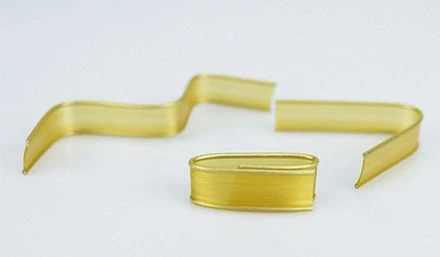
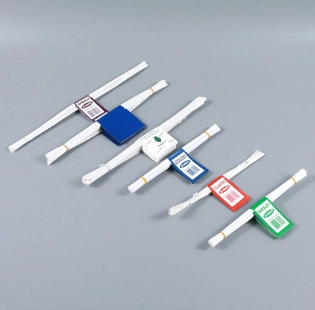
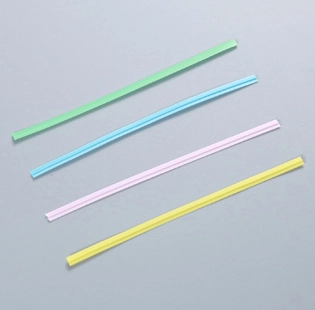
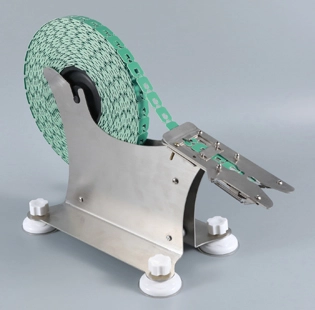
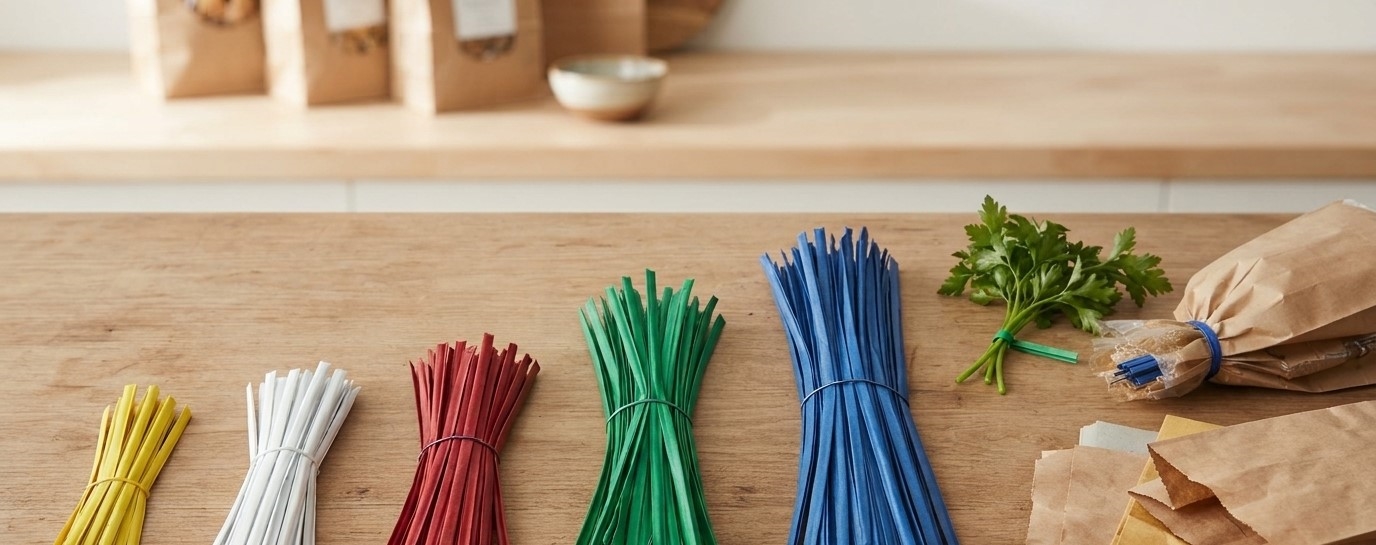
Hongda's twist tie range gives us room to work with here. The PE and PET series can be cut to customer-specified lengths, in pre-cut or roll form depending on how the tie is being applied. The vegetable tie line covers a span from roughly 2" up to 24"—short lengths for single stems or small bunches, longer ones for bulk. You can see the range on our Twist Ties product page, but the page is a menu, not an answer. The answer depends on your bag, your product, and the person or machine closing it.
Material choice sometimes complicates the length question too, and it is worth raising early. A food-contact application needs food-grade material. A garden tie needs a surface that will not scar the plant. An outdoor or damp environment pushes you toward something that will not rust. These choices narrow the available specifications, and it is easier to settle them alongside the length rather than after. If a customer mentions printing or branding on the tie, that is another factor that can affect what lengths are practical to produce.
The short version
None of this is meant to turn a small purchase into a project. Most of the time, a customer sends a bag photo, tells us what goes in it and how it gets closed, and we come back with a recommendation in a day or two. The back-and-forth is short when the information is there and a little longer when it is not. Either way, it beats the alternative—a box of ties sitting unused in a cupboard because they were ordered against a flat bag that nobody actually packs.
If you are not sure what length you need, you do not have to work it out first. Send us the bag, or a picture of it full, and tell us how it gets closed. That is usually enough for us to get you close, and a sample or two will settle the rest.