Aug 06-2025
Travel Uses for Bread Clips: An Underlooked Gadget
READ MORE >

Choosing a twist tie format is mainly a question of how the tie fits into the closing process.
Some closing tasks use individual pre-cut ties that are ready to apply. Others require a continuous roll that can be supplied and cut during operation. The right format therefore depends on how the tie is supplied, handled, and applied.
This guide focuses on twist tie product formats and closing workflows. It does not cover detailed material selection, color selection, or individual packaging applications.
Before selecting a twist tie format, look at how the closing operation is performed.
The main question is:
How does the tie move from supply to the finished closure?
A simple manual process may require an individual tie that can be picked up and applied directly. A repeated closing operation may instead benefit from a continuous roll that can be fed and cut as needed.
This creates a basic relationship:
Closing Process → Tie Format → Application Method
Understanding this relationship can make format selection more straightforward.
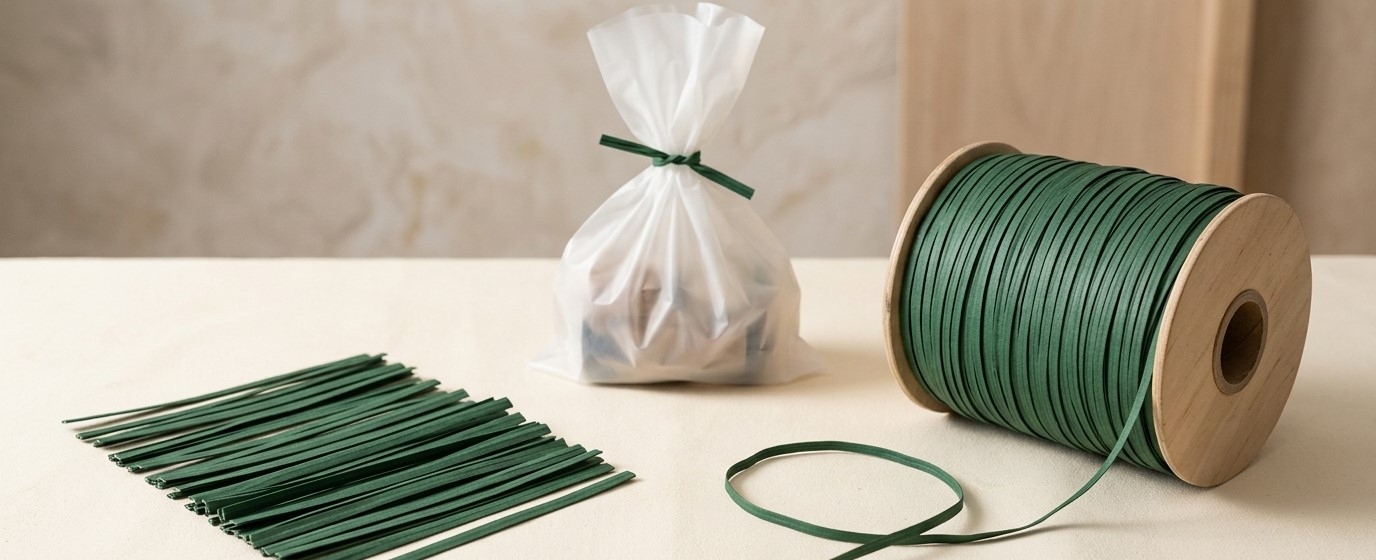
The two common supply formats are pre-cut twist ties and continuous twist tie rolls.
| Factor | Pre-Cut Twist Ties | Continuous Twist Tie Rolls |
|---|---|---|
| Supply format | Individual pieces | Continuous roll |
| Handling | Pick up individual ties | Feed from the roll |
| Length | Pre-determined | Cut as needed |
| Manual use | Suitable for individual closing tasks | Can be used where roll handling is practical |
| Equipment use | Depends on equipment design | Suitable for workflows designed for roll feeding |
| Workflow focus | Ready-to-use individual pieces | Continuous supply and controlled dispensing |
Neither format is suitable for every closing process. The choice depends on how the tie needs to enter and move through the operation.
The tie format can influence several stages of a closing process.
A pre-cut tie arrives as an individual piece. The operator or equipment handles each tie separately.
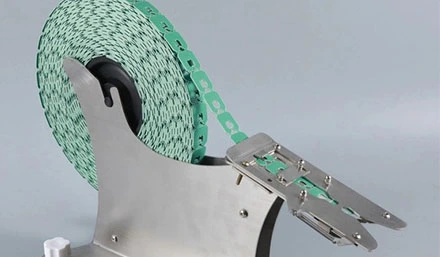
A continuous twist tie roll provides a longer, uninterrupted supply. The tie can be dispensed from the roll and cut according to the requirements of the process.
With pre-cut ties, the main handling task is picking up and positioning the individual piece.
With a roll, the process needs a way to guide, dispense, or feed the tie. In equipment-assisted operations, the machine may control this part of the process.
Pre-cut ties already have a defined length before they reach the closing operation.
With a continuous roll, the required section can be cut during the process. This can be useful when the workflow requires flexibility in the amount of tie supplied.
The important point is that tie format and tie length are related, but they are not the same selection factor. Format determines how the tie is supplied; detailed length selection should be based on the actual closing requirement.
The final closing step may be completed manually or with equipment.
For manual closing, the operator handles and twists the tie directly.
For equipment-assisted closing, the selected tie format needs to match the way the equipment supplies and applies the tie.
Manual closing usually involves an operator taking a tie, positioning it around the gathered bag or package opening, and twisting it to create the closure.
When evaluating the format, consider:
Does the operator need an individual tie that is ready to use?
Is one predetermined tie length suitable for the operation?
Does the process require different tie lengths?
Would handling individual pieces be practical for the expected workload?
Is there a reason to use a continuous roll instead?
Pre-cut ties may be appropriate when the workflow is based on individual pieces.
For example, if the operator needs to take one tie, close one package, and then repeat the operation, an individual pre-cut format provides a straightforward supply method.
A continuous roll may be considered when the closing process benefits from a continuous supply of tie.
However, a roll introduces additional handling requirements. The tie needs to be dispensed and, when necessary, cut before application.
Therefore, the decision should be based on the complete workflow rather than simply on whether the tie is used manually.
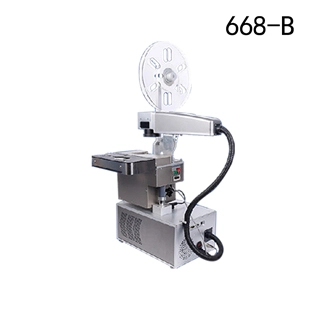
When equipment is involved, the tie format becomes part of the overall closing system.
The equipment may need to:
Receive the tie from its supply format.
Guide or feed the tie.
Cut the required section when using a continuous roll.
Position the tie around the package opening.
Complete the twisting or closing operation.
A machine designed around a particular supply method may not work with every twist tie format.
For this reason, equipment-assisted closing should be evaluated from the tie supply point to the finished closure.
A roll format may fit a process that requires:
Continuous tie supply
Controlled feeding
Cutting during operation
Repeated closing cycles
This type of workflow is particularly relevant when the closing operation is organized around feeding and cutting the tie as part of the process.
Pre-cut ties may be considered when the equipment is designed to handle individual tie pieces.
The important consideration is equipment compatibility. The fact that a tie is pre-cut does not by itself mean it is suitable for a particular machine.
Always check how the equipment is designed to receive and apply the tie.
Before selecting a format, answer the following questions:
This determines how much of the tie-handling process needs to be performed by the operator or equipment.
If yes, a pre-cut format may fit the workflow more naturally.
If the process requires tie to be supplied continuously, a roll format may be more appropriate.
Pre-cut ties provide a predetermined length. A roll allows the tie to be cut during the process.
If cutting is part of the closing process, the supply format and equipment need to support that operation.
The number and frequency of closing operations can affect how practical different supply formats are.
For machine-assisted applications, this should be confirmed before selecting the final product.
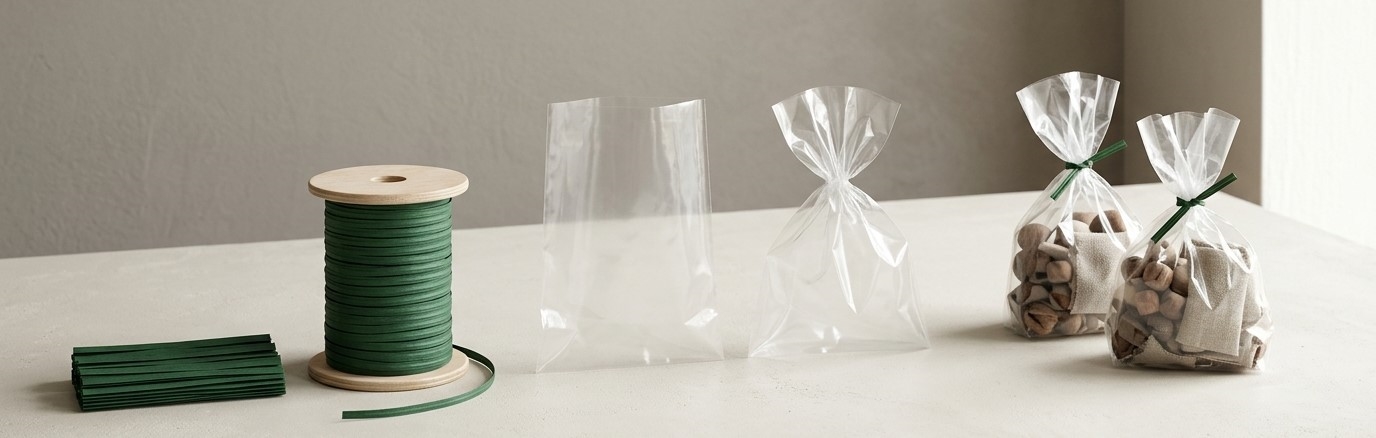
A simple way to approach format selection is to start with the closing method.
Manual closing + individual ties needed
→ Consider pre-cut twist ties
Continuous tie supply + repeated closing
→ Consider continuous twist tie rolls
Equipment-assisted closing
→ Check whether the equipment is designed for roll-fed or pre-cut tie formats
Variable tie length required
→ Consider whether a continuous roll format provides the required flexibility
This approach keeps the decision focused on the actual operation rather than on product features that may not affect the closing process.
Once the appropriate format has been identified, the next step is to check the product specifications.
Consider the following:
Tie format — pre-cut or continuous roll
Supply method — individual pieces or roll-fed
Required length — based on the actual closing task
Closing method — manual or equipment-assisted
Operating process — individual or repeated closing
Equipment compatibility — when machinery is used
Packaging and handling requirements — how the tie will be stored and supplied to the operation
These factors should be considered together.Once the required format and workflow have been identified, you can review the available twist tie products to compare the formats that match your closing process.
A suitable tie is not simply the one with the right physical characteristics. It also needs to fit the way the closing process is organized.
Choosing a twist tie product format starts with the closing process.
Pre-cut twist ties provide individual pieces that are ready to handle, while continuous twist tie rolls provide a continuous supply that can be dispensed and cut during the operation.
The most useful selection sequence is:
Closing Process → Tie Format → Application Method → Product Specifications
By starting with the workflow, users can narrow down the appropriate tie format before evaluating more detailed product requirements.
For equipment-assisted applications, compatibility between the twist tie format and the closing equipment should also be confirmed before the final product is selected.