Sep 24-2026
Plastic Twist Tie Product Formats: Choosing for Your Closing Process
READ MORE >

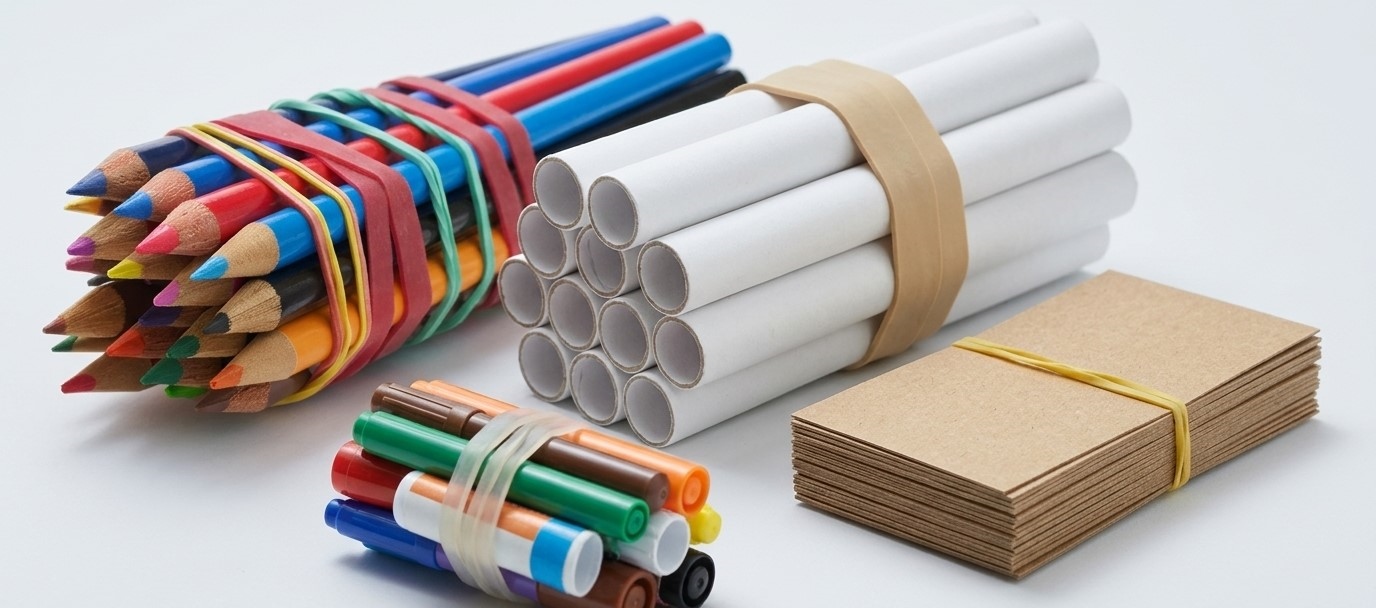
Rubber bands are a common choice for holding groups of items together, but their effectiveness depends on several practical factors. Before selecting a rubber band for a bundling task, users need to evaluate the items being bundled, the band's specifications, and the conditions under which the bundle will be handled.
What should users consider before using rubber bands for bundling different types of items?
The physical characteristics of the items determine whether a rubber band can provide stable bundling and what type of band may be appropriate.
A rubber band should be selected based on the overall circumference of the bundled group, not the size of a single item. The number of items and their arrangement affect the overall circumference of the bundle after bundling, which in turn influences the required band size.
Regular shapes allow the rubber band to make consistent contact around the bundle. Irregular shapes may cause uneven tension, resulting in loose areas or concentrated pressure points. Users should check whether the band can maintain contact across the entire bundle.
Smooth surfaces may allow the band to slide, while rough surfaces can increase friction but may also cause wear. Soft or deformable items may change shape under band pressure. These surface factors affect how well the band stays in position during use.
This section focuses on the rubber band's own specifications and how they correspond to the bundling task. Item dimensions are addressed in Section 1; here the discussion centers on band length, width, thickness, and the degree of stretch required.
The unstretched length of a rubber band is not equivalent to the circumference of the items it can bundle. The actual fit depends on the band's structure and the acceptable level of stretch for the application. Users should compare the band's unstretched length with the bundle's circumference and check the manufacturer's recommended size range or test the fit with actual items.
Width and thickness affect the contact area and the way the band behaves during application. However, performance does not follow a fixed rule: a wider or thicker band is not automatically more durable or better at holding items. The appropriate specification depends on the material, the bundle, and the handling conditions.
A band that is too small may require excessive stretching, while an oversized band may not provide sufficient tension. Both conditions can affect how well the bundle holds together. The suitable size should be determined through sample testing with the actual items.
Section 2 addressed how band specifications match the bundle. This section focuses on how elasticity and tension meet the holding needs of the application.
Elasticity allows the band to stretch over items and retract to hold them. Different applications require different levels of elasticity. Some bundles need a firm hold, while others may require some flexibility. Users should consider how much movement or give the bundle needs.
The pressure applied by the band should match the items' tolerance. Light items may only need a mild hold, while items that must stay closely grouped may require more tension. Delicate or easily deformed items need particular attention, as excessive pressure can cause damage. Elasticity should not be assumed to guarantee a constant or stable holding force over time.
Users should consider whether the band's elasticity and tension are sufficient to maintain the required hold without excessive pressure. The band's position during movement and handling is discussed in the next section.
Slippage is a common issue in rubber band bundling. Understanding why it occurs helps users assess whether a particular application is suitable.
Common causes include smooth item surfaces, irregular bundle shapes, a mismatch between band size and bundle size, improper band placement, and movement during transport or handling. Identifying the likely cause helps determine whether a different band size or arrangement would improve stability.
The way items are arranged affects whether the band can maintain contact. If items can easily shift against each other, the bundle's shape may change and the band may loosen. A more stable arrangement helps the band stay in position.
Stability should be observed during light movement, normal carrying, and placing or retrieving items. A band that stays in place during static storage may still shift during handling. Testing should reflect the actual conditions in which the bundle will be used.
Rubber bands have practical limits. Recognizing these helps users avoid unsuitable applications and product damage.
Users should not judge a rubber band's load capacity based on size alone. Suitability for heavier or bulkier bundles depends on the specific band specifications, the load involved, and the application conditions. These cases should be tested to confirm whether the band can hold the items securely under expected handling.
Sharp edges can nick or cut a rubber band, and rough surfaces can abrade the material. Users should inspect the contact points between the band and the items to identify potential damage risks.
Soft items may be compressed or dented by excessive band pressure. Users should select a suitable band size and tension to avoid applying unnecessary pressure while maintaining the required hold.
Temperature, UV exposure, and long-term storage can affect the elasticity and performance of rubber bands. Different rubber materials respond differently to these conditions. Specific performance claims should be based on the product's material information and actual testing rather than general assumptions.
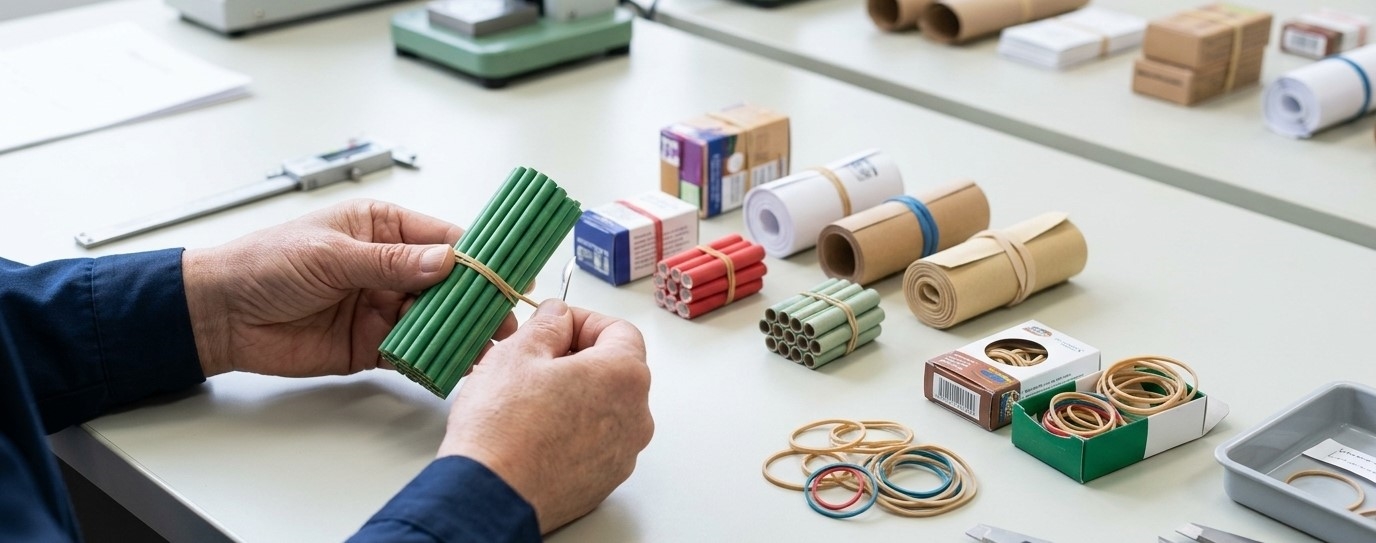
Practical testing is the most reliable way to confirm whether a rubber band is suitable for a given bundling application. This section outlines the steps users can take.
Test the band using the actual items and bundle configuration. Check whether it is easy to apply, whether it requires excessive stretching, whether it fits the bundle properly, and whether it causes deformation.
Move the bundle as it would be moved in actual use. Check for loosening, shifting, or other changes in band position. This observation replaces separate stability checks and should be done under realistic conditions.
Test multiple sizes, widths, and thicknesses on the same bundle. Compare how each performs in terms of fit, holding, and stability. The results help identify the most suitable specification for the application.
Consider how easy the band is to install and remove. For operations that bundle many identical products, check whether the holding effect is consistent across multiple bundles. If the band is intended for repeated use, observe whether its elasticity changes noticeably after multiple stretches. Avoid assuming a specific number of reuse cycles unless supported by actual test data.
The suitability of a rubber band for bundling depends on three main factors: matching the band's specifications to the bundle, understanding the conditions of use, and testing with actual products. Size, elasticity, surface characteristics, and handling requirements should be evaluated together. Slippage, excessive stretch, and item deformation are practical concerns that testing can help identify. Testing different band specifications under actual working conditions helps users identify a suitable bundling solution for their specific needs.
If you wish to purchase relevant products, please contact us.