Oct 02-2026
Twist Ties vs. Bag Clips: What Is the Difference?
READ MORE >

Every twist tie consists of a metal wire core (typically galvanised steel, aluminium, or copper) and an outer covering. The covering material—paper, PVC, or PET—determines the tie's flexibility, moisture resistance, durability, and appearance. In addition to these standard materials, heavy‑duty PE‑coated wire (with thicker gauges and coatings) is available for industrial and automated applications. Choosing the right combination of core gauge and covering is the key to matching performance with your specific use case.
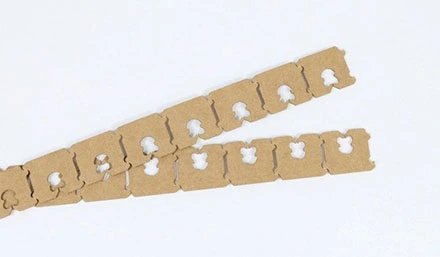
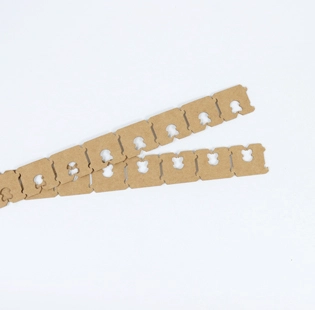
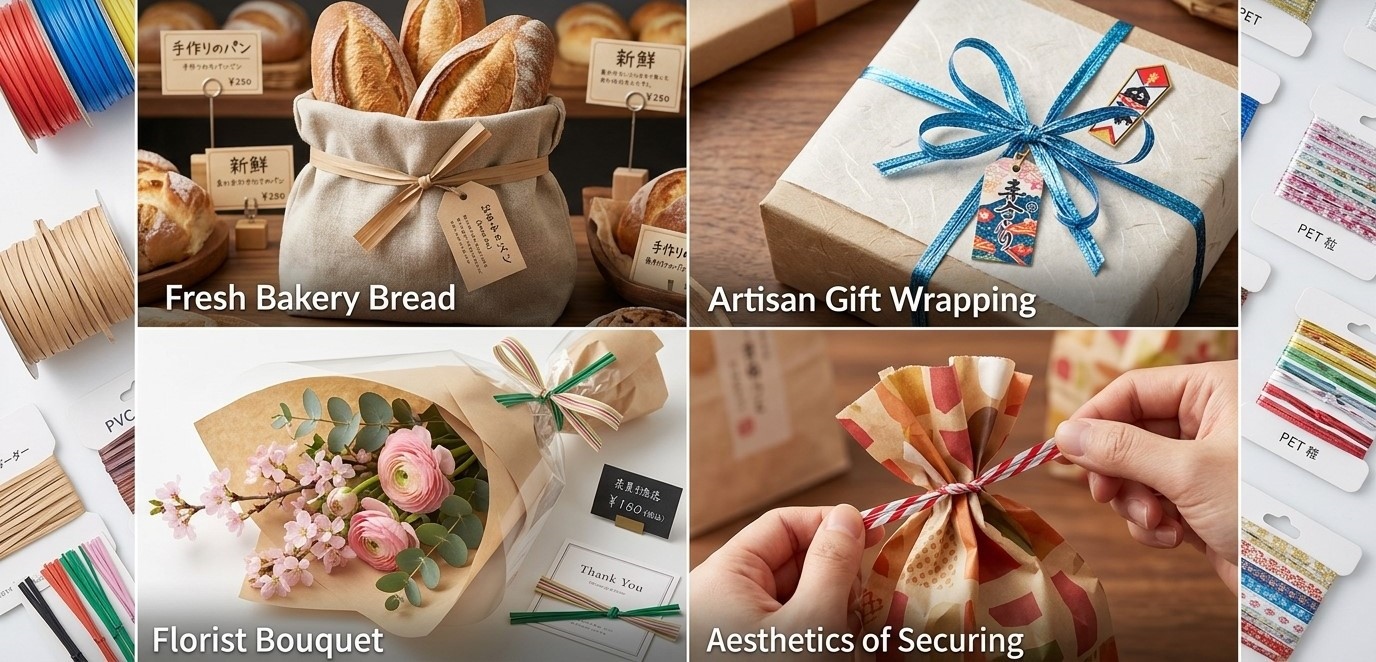
Paper twist ties feature a thin metal wire sandwiched between two layers of paper, often with decorative printing.
Advantages:
· Natural, craft‑oriented appearance that appeals to eco‑conscious consumers
· Commonly used with bakery bags for bread packaging
· Cost‑effective for high‑volume use
· Accepts high‑quality printing for branding
· The paper outer layer is biodegradable, while the metal wire core requires separate disposal
Disadvantages:
· Poor moisture resistance – absorbs water and weakens when wet
· Limited durability – prone to fraying and losing strength over time
· Not suitable for cold storage or humid environments
Best applications:
· Bakery and bread bags
· Gift packaging and crafts
· Floral and dry produce
PVC (Polyvinyl Chloride) twist ties have a plastic coating that fully encases the wire. PVC is widely used because it offers good flexibility and moisture resistance.
Advantages:
· Highly moisture‑resistant – suitable for packaging used in refrigerated and frozen environments
· High flexibility – remains pliable even at low temperatures
· Vibrant colours – available in a wide range of options
· Smooth texture – easy to twist with gloved hands
· Cost‑effective among plastic options
Disadvantages:
· Environmental concerns – PVC production and disposal raise sustainability issues
· Limited heat resistance – can soften at high temperatures
· Limited printability – surface does not readily accept detailed ink
Best applications:
· Food packaging (bread, produce, meats, frozen goods)
· General packaging where moisture protection is needed
· Cable management
· Greenhouse and horticulture (plant ties)
PET (Polyethylene Terephthalate) twist ties offer a balance of performance and recyclability.
Advantages:
· Offers high tensile strength and dimensional stability
· Highly moisture‑resistant – comparable to PVC in wet conditions
· Glossy finish provides a premium appearance
· Wider temperature range than PVC
· More widely recyclable than PVC; can incorporate recycled content
· Excellent clarity for clear ties
Disadvantages:
· Higher cost than PVC or paper
· Stiffer feel – less flexible, may affect ease of use
· Recycling infrastructure varies by region
Best applications:
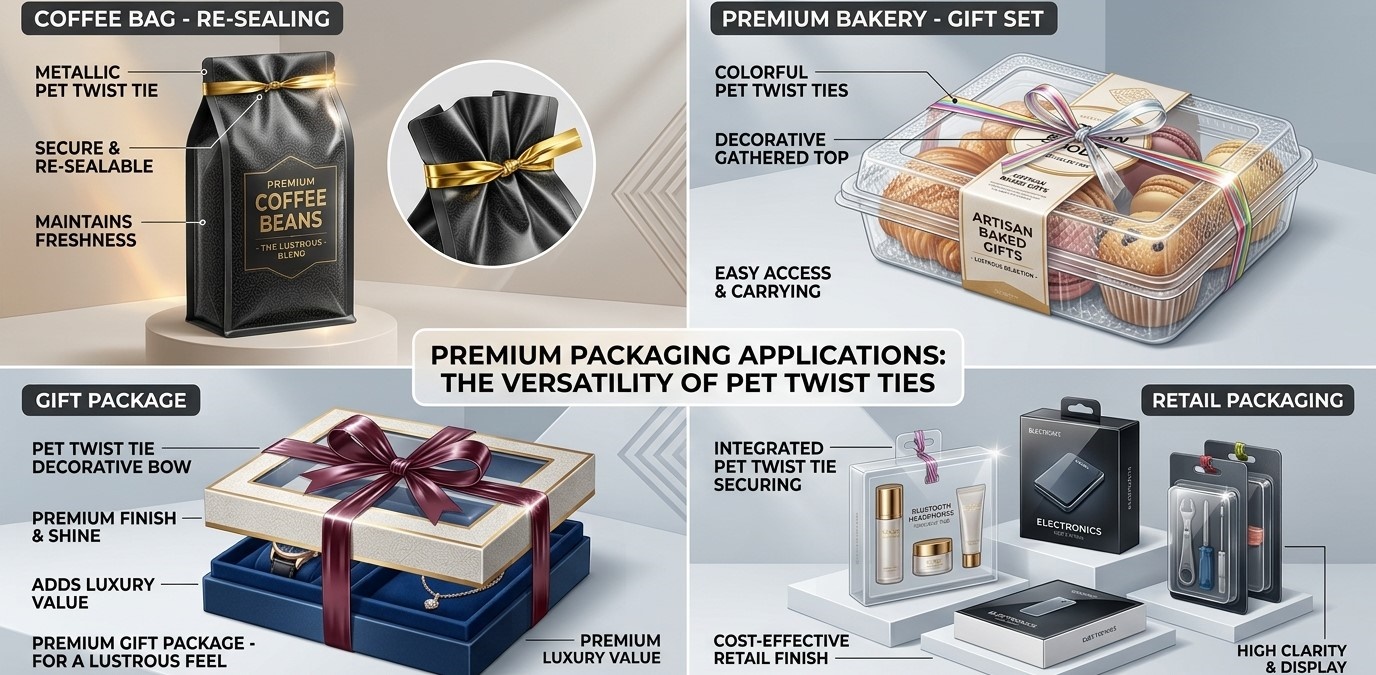
· Premium retail packaging (glossy finish supports high‑end product positioning)
· Long‑distance transportation and export shipments
· High‑end gift and specialty items
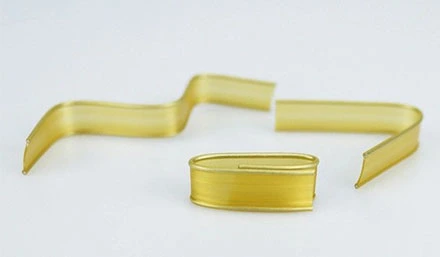
For industrial and heavy‑duty applications, manufacturers produce twist ties with thicker wires and robust polyethylene (PE) coatings. This is not a separate base material but rather an industrial‑grade product option, typically supplied in rolls for automated machinery. Its moisture resistance and durability depend largely on the coating thickness and wire gauge selected.
Advantages:
· Maximum strength – suitable for bundling heavier items, depending on wire gauge and coating thickness
· Durable coating – resists abrasion and environmental damage
· Customisable gauge – available in various thicknesses to match load requirements
· Machine‑compatible – designed for automated packaging lines
· Higher cost per unit
· Limited aesthetic appeal – functional rather than decorative
· Not suitable for consumer retail packaging
Best applications:
· Industrial bundling (pipes, lumber, heavy items)
· Garden and agricultural use (vines, trees, greenhouse)
· Construction and contractor temporary bundling
· Automated packaging lines
Material / Option | Flexibility | Moisture Resistance | Printability | Machine Compatibility | Typical Uses | Limitations |
Paper | Good | Poor | Excellent (high‑quality printing) | Common | Bakery, gift wrap, dry goods | Weakens when wet; not for cold storage |
PVC | Excellent | Highly moisture‑resistant | Limited | Common | Food bags, produce, general packaging | Environmental concerns; limited heat resistance |
PET | Good | Highly moisture‑resistant | Fair (specialised processes available) | Depends on machine setup | Premium retail, long‑haul shipping | Higher cost; stiffer feel; recycling varies |
Heavy‑Duty PE‑Coated | Fair | Depends on coating thickness | Not applicable (functional use) | Common for industrial systems | Industrial bundling, garden, automated lines | Bulky; limited aesthetics; not consumer‑oriented |
The choice of covering material directly influences several performance attributes:
· Twist retention – How well the tie holds its twisted shape over time. PVC and PET generally offer good memory; paper may lose grip if exposed to moisture.
· Flexibility – Ease of twisting and conforming to package shapes. PVC is the most flexible; PET is stiffer; paper offers moderate flexibility when dry.
· Durability – Resistance to tearing, abrasion, and environmental factors. PET and PE‑coated wire are the most durable; paper is the least.
· Machine compatibility – How the tie feeds through automated equipment. Paper and PE‑coated wire are common in high‑speed lines; PET's stiffness may require adjustments.
· Appearance after repeated use – How the tie looks after being twisted and untwisted. PVC and PET maintain their appearance; paper may show creases or fraying.
While the covering material is critical, several other factors affect overall performance. Always consider:
· Wire gauge – Thicker wire provides stronger holding power; thinner wire offers greater flexibility but less strength.
· Tie width – Wider ties distribute pressure and reduce package damage; narrower ties are more discreet.
· Tie length – Must be sufficient to wrap around the package and allow easy twisting; the exact length depends on your package diameter.
· Coating thickness – For plastic‑coated ties, thicker coatings improve moisture resistance and durability but may reduce flexibility.
· Manual vs. machine application – Manual ties prioritise ease of use; machine ties require precise roll dimensions, winding methods, and consistent stiffness.
Avoid these frequent pitfalls:
Using paper ties in wet or refrigerated environments – Paper absorbs moisture and may lose strength. Choose PVC or PET instead.
Ignoring wire gauge – A tie that looks perfect on the outside may have a wire too thin for your load, leading to breakage or loose closures.
Choosing material by appearance only – A glossy PET tie may look great but could be overkill for a simple dry‑goods application; paper might work just as well at lower cost.
Not checking machine compatibility – Even the best material will cause production stoppages if it doesn't feed correctly. Always test with your equipment.
Overlooking coating thickness – In industrial settings, a thin coating may wear through quickly, exposing the wire and causing corrosion or abrasion.
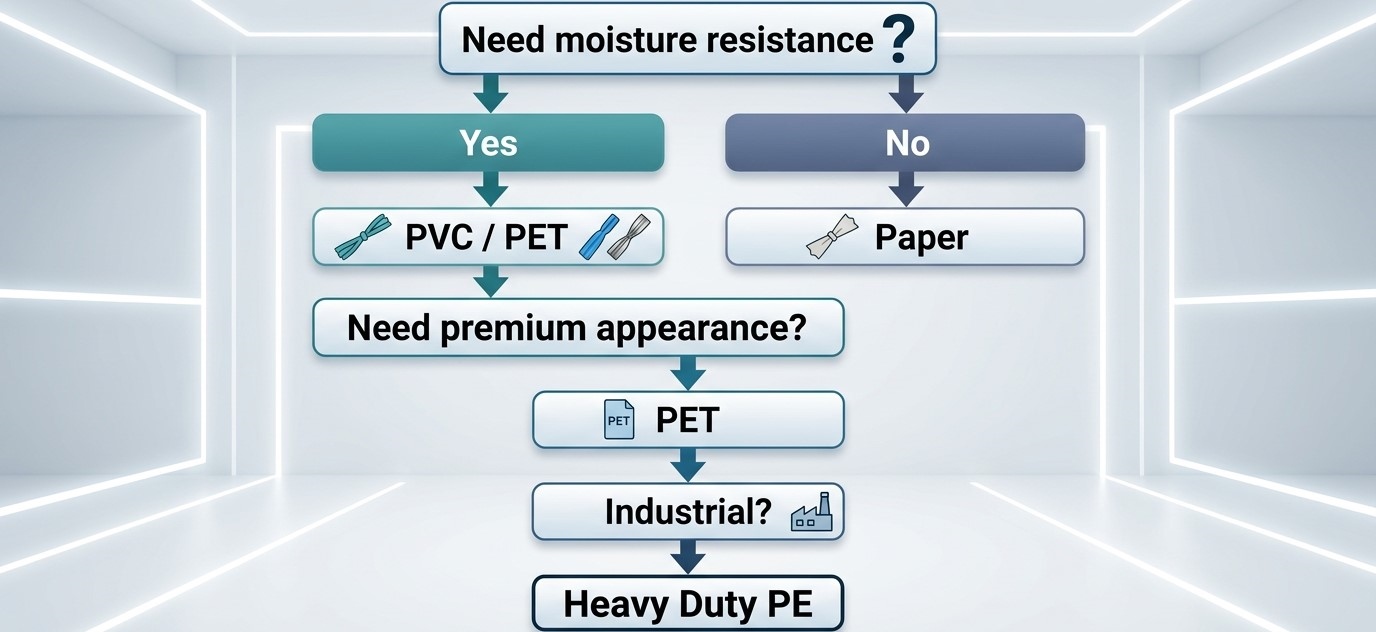
Use the following decision logic to guide your selection:
1. Is moisture exposure expected?
Yes → Consider PVC or PET (highly moisture‑resistant)
No → Paper may work well
2. Need a natural, eco‑friendly appearance?
Yes → Paper (paper‑based appearance with biodegradable outer layer) or PET (recyclable)
No → PVC or PE‑coated are fine
3. Is this for heavy‑duty or industrial use?
Yes → Heavy‑duty PE‑coated wire (select appropriate gauge and coating thickness)
No → Standard paper/plastic ties
4. Does your product require a premium look?
Yes → PET (glossy finish)
No → PVC or paper (budget‑friendly)
After this initial filter, review the specific application recommendations:
For Bakery and Baked Goods
Recommendation: Paper Twist Ties
Baked goods may benefit from breathable packaging, which paper complements. Paper ties can help support artisan and natural branding. If your products are frozen or refrigerated, choose PET to handle moisture.
For Fresh Produce
Recommendation: PVC Twist Ties
Produce often encounters moisture from washing and refrigeration. PVC offers reliable water resistance at a low cost, and is available in a range of colours for product identification or branding. For premium produce displays, PET adds a glossy touch.
For Premium Retail Packaging
Recommendation: PET Twist Ties
PET is often selected for its glossy appearance, good strength, and improved recyclability—qualities that align with high‑end product positioning.
For Industrial Applications
Recommendation: Heavy‑Duty PE‑Coated Wire
When strength and durability are paramount—bundling heavy items, securing loads, or integrating with automated machinery—choose heavy‑duty PE‑coated wire with an appropriate gauge and coating thickness.
For Sustainable / Green Brands
Recommendation: Paper or PET
Paper offers a natural, biodegradable outer layer for dry goods. PET provides a more recyclable alternative to PVC for moisture‑sensitive products.
· Width – Available in various widths to suit different package sizes and holding strength requirements. Choose a width that distributes pressure evenly without being overly bulky.
· Length – Choose a length that wraps securely around your package with enough excess for twisting. The right length depends on your package diameter and closure style.
· Colour – Use brand colours for identity, different colours for product variants, or bright shades for visibility.
· Printing – Paper ties accept detailed printing (logos, barcodes, messages). PET and PVC are limited in printability; custom colour is possible but detailed printing requires specialised processes and adds cost.
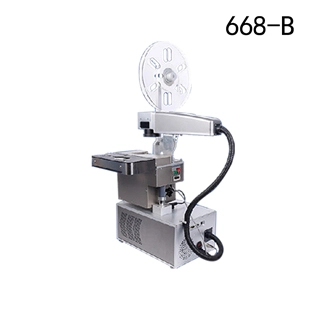
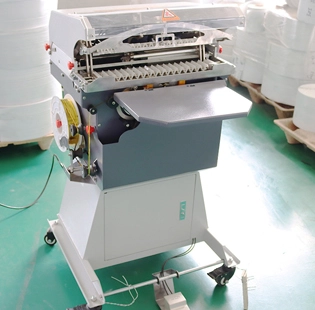
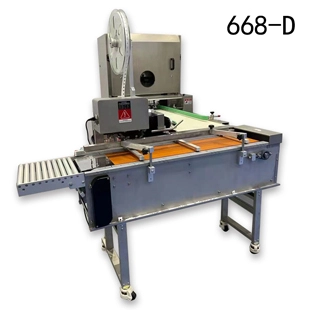
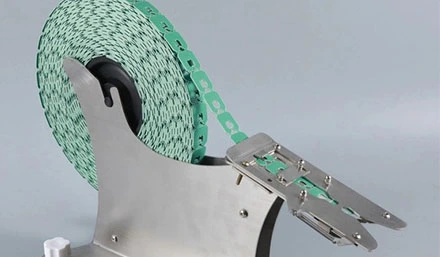
· Machine compatibility – Automatic twist tie machines may require specific wire stiffness, coating friction, roll dimensions, and winding methods. Always confirm compatibility with your equipment before committing to a material.
Which twist tie material is food safe?
Twist ties made from paper, PVC, or PET can be manufactured to meet applicable food‑contact regulations in your target market. Always verify with your supplier that the specific product complies with local standards.
Which material is highly moisture‑resistant?
PVC and PET offer strong moisture resistance. Paper absorbs moisture and degrades. For refrigeration, freezing, or any damp environment, choose a plastic tie. For industrial settings, the moisture resistance of PE‑coated wire depends on the coating thickness.
Which twist tie offers the longest durability?
PET generally offers good longevity due to its moisture resistance and tensile strength. For extreme physical durability in industrial environments, heavy‑duty PE‑coated wire (with appropriate gauge) is typically the preferred choice.
Can paper twist ties be recycled?
Most paper twist ties are not accepted in standard paper recycling because of the embedded wire. Disposal depends on local recycling systems. The paper outer layer itself is biodegradable, but the metal core requires separate handling.
Are PET twist ties more eco‑friendly than PVC?
Generally, yes. PET is more widely recyclable than PVC in many regions and can incorporate recycled content. However, the best choice depends on your local recycling infrastructure and specific product needs.
The best twist tie material depends on your application, packaging environment, and performance requirements. Paper suits dry, breathable uses like bakery and gifts. PVC provides affordable moisture resistance for everyday packaging. PET offers a glossy, recyclable option for premium brands. Heavy‑duty PE‑coated wire handles industrial loads, with performance that varies by wire gauge and coating thickness. Remember to look beyond the covering material—wire gauge, width, length, and machine compatibility are equally important. The right choice depends on balancing performance, appearance, cost, and compatibility with your packaging process.