Jan 23-2026
Twist-HD Twist ties Strengthen the Identity Chain of Fruits and Vegetables
READ MORE >

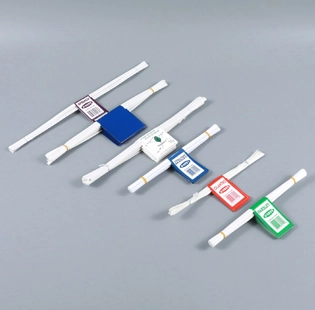
Have you ever encountered these packaging challenges: After using ordinary ties to tie, you still have to apply labels to indicate information, a tedious process; handwritten labels easily blur, stickers come off when exposed to water, resulting in loss of product information; ties loosen during transportation, causing labels to shift, making it difficult for consumers to identify key information? Now, label ties combine the functions of "binding and securing" with "information identification" to completely resolve the inefficiencies and risks of traditional packaging, becoming a "smart packaging partner" for various industries.
Label Ties' core advantage lies in its integrated label design. The label is made of a special material that is waterproof, scratch-resistant, and abrasion-resistant, and features high-adhesion, eco-friendly ink, ensuring long-lasting, legible information even in challenging environments.
Even in the cold, humid environment of cold chain food, the label remains wrinkle-free and smudge-free, ensuring clear information such as the production date, expiration date, and place of origin.
For creams and liquids that come into contact with daily chemical products (such as shampoo and hand cream), the label is waterproof and oil-resistant, ensuring that ingredient information and directions remain clearly visible.
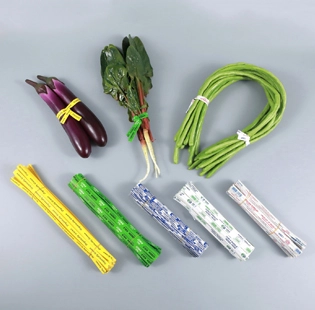
For agricultural fruit and vegetable bundling, labeling such as variety, harvest date, and pesticide residue test results remains intact despite exposure to sunlight and rain, alleviating consumer concerns.
In industrial applications, the label withstands minor impact and friction, ensuring that key information such as part model, batch number, and inventory code remains intact, facilitating warehouse management.
Traditional packaging requires two steps: tying with wire and applying labels. This is not only labor-intensive and time-consuming, but can also lead to rework due to misaligned or detached labels. Label ties, on the other hand, require only one operation:
The wire tie securely ties the product (such as bread bags, flower bouquets, or parts bags);
The label is directly applied in a visible location, eliminating the need for additional tools.
In actual testing, using label ties on food factory production lines has significantly improved efficiency by reducing the time it takes to package a single bag. Florists no longer need to attach separate hang tags when tying bouquets, significantly reducing labor costs. For businesses, label ties serve as both a tie and a label, radically streamlining the packaging process and eliminating the need for secondary processing.