

Jul 29-2025
Plastic Twist Ties: Detail Innovation and User Experience Improvement In Candy Packaging
READ MORE >

Introduction
As bag closing becomes a repeated task in a packaging workflow, businesses may wonder whether a twist tie machine is worth considering. This article helps you decide when equipment evaluation makes sense. It covers the practical differences between manual and machine-assisted closing, and identifies work scenarios that may justify a machine. It does not cover specific machine selection or brand recommendations. Volume alone does not determine whether equipment is necessary. Workflow requirements, labor, bag formats, and operating conditions also matter.
What Does a Twist Tie Machine Do in a Bag Closing Workflow?
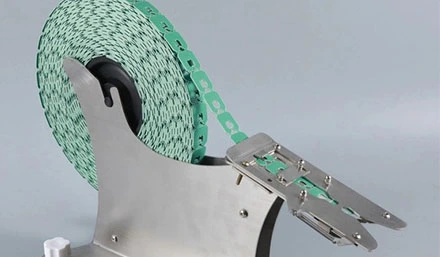
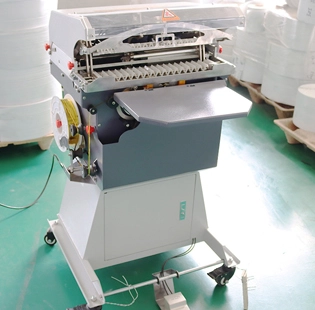
A twist tie machine helps apply twist ties to bag necks that have been prepared for closing. It may supply, cut, position, and twist the tie as part of the closing process. Different machines offer different levels of automation and are suitable for different applications. Detailed working principles and technical specifications are covered separately.
When Is Manual Twist Tie Application Usually Sufficient?
Manual bag closing may be suitable when:
- Bag closing volumes are low or irregular
- Product types and bag formats change frequently
- Bag closing is not a primary production step
- The workflow requires high flexibility
- There is no immediate need for equipment investment
- Operators can complete the task without causing significant delays or operational problems
If manual closing fits the current workflow and does not create significant consistency problems, a machine may not be necessary.
Manual closing is not automatically cheaper or less efficient; results depend on the product, operators, and process.
Signs That a Twist Tie Machine May Be Worth Considering

1. Bag Closing Has Become a Repetitive Task
- Similar bag closing actions are repeated throughout the day
- Bag closing occupies a fixed portion of working time
- Operating steps are highly repetitive
- A standardized closing process is needed
2. Manual Closing Creates Workflow Delays
- Filled bags wait for closing after filling
- The closing step affects subsequent packing, labeling, or transfer
- Operators frequently switch between tasks
- The closing step does not connect smoothly with upstream or downstream processes
3. A More Consistent Closing Process Is Needed
- More uniform closing methods
- Less variation between operators
Equipment may help support these goals, but it does not guarantee perfect consistency.
4. Labor Allocation Is Becoming a Concern
- Bag closing requires continuous staffing
- Operators need to handle other packaging tasks
- The business wants to reassign repetitive work
The question is how equipment fits the overall allocation of labor.
5. The Packaging Workflow Is Stable Enough for Equipment
Even if bag closing volume is high, equipment may not be suitable if bag formats, twist tie formats, or procedures change frequently. Consider whether the bag format is relatively stable, the tie format is clearly defined, and the closing step is repetitive and easy to standardize.
Factors to Check Before Considering a Twist Tie Machine
1. Bag Format and Opening Design
Check:
- Bag material and structure
- Whether the bag neck is suitable for twist tie closure
- Whether the bag neck needs to be prepared before closing
- Whether different bag formats require different methods
2. Twist Tie Format
Check:
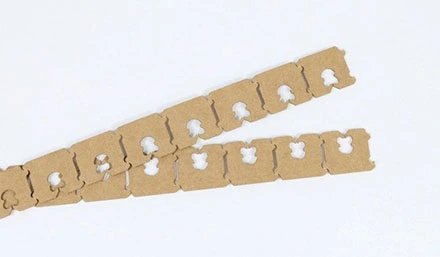
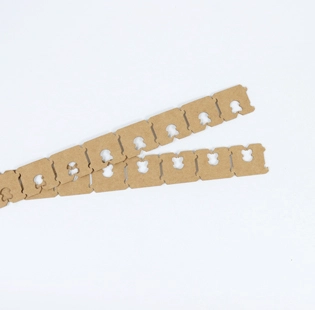
- Whether pre-cut twist ties or continuous rolls are used
- Whether the supply format suits the workflow
- Whether a specific length or form is required
- Whether the tie matches the existing closing method
For more details on these formats, see our guide to pre-cut twist ties and continuous twist tie rolls.
3. Closing Volume and Work Frequency
- Bag closing frequency per day or per shift
- Whether the work occurs continuously
- Whether peak periods increase the load
- Whether bag closing is a fixed production step
- Whether current manual operation can complete the task reliably
4. Available Workspace and Workflow Layout
Equipment requires space for placement and operation. Bag neck preparation, closing, and subsequent steps need to connect logically. Adding equipment should not make the overall process more complicated.
5. Maintenance, Training, and Operating Requirements
- Training requirements for operators
- Basic maintenance and operating requirements
Equipment investment includes not only purchase but also use and maintenance.
Manual vs. Machine-Assisted Bag Closing

Consideration | Manual Twist Tie Application | Machine-Assisted Closing |
Setup flexibility | Usually flexible for changing tasks | Depends on equipment and workflow |
Small or variable workloads | May be suitable | May not be necessary |
Repeated closing tasks | Can require continuous operator involvement | May support a more repeatable process |
Labor allocation | Relies on manual operation | May reduce some repetitive manual handling |
Process consistency | Depends on operator and procedure | Depends on equipment, setup, and operation |
Equipment requirements | Minimal equipment | Requires suitable equipment and operating conditions |
Typical use context | Flexible or lower-volume workflows | Workflows where equipment integration is justified |
Neither approach is automatically suitable for every application. The right choice depends on the packaging workflow, bag format, closing requirements, and operating conditions.
When a Twist Tie Machine May Not Be Necessary
A machine may not be the right choice when:
- Bag closing tasks are infrequent
- Bag closing demand is irregular
- Bag formats and products change frequently
- Manual operation has not caused obvious workflow problems
A machine should solve a practical workflow problem. If the current manual process is effective and flexible enough, continuing with manual closing may be reasonable.
A Practical Checklist Before Evaluating Equipment
Before considering a twist tie machine, ask:
- How often are bags closed?
- Has manual closing become a repeated bottleneck?
- Is the bag format relatively stable?
- Is the twist tie format already defined?
- Would equipment fit the existing workflow?
- Have training and maintenance requirements been considered?
Conclusion
A twist tie machine may be worth evaluating when bag closing becomes a frequent, repetitive, and structured part of a packaging workflow. However, volume alone is not the deciding factor. Bag format, tie format, labor requirements, workflow stability, and operating conditions all matter. The next step is to evaluate which machine characteristics fit the application.