Jul 01-2025
Gather Hongda's Strength and Ignite the Dream of Foreign Trade - The
READ MORE >

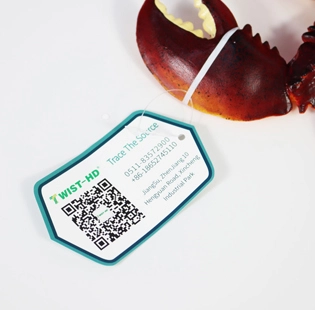
A label tie combines fastening and identification in one product. It secures an item or group of items while keeping a label attached, unlike an ordinary tie that primarily serves a fastening function. The exact design varies by product, but the purpose is to keep identifying information associated with the item being secured.
This guide explains how label ties work, how they differ from ordinary ties and separate label-and-tie systems, where they are used, and what to consider when choosing one.If you are evaluating a specific design, review the available [label ties] to confirm which format matches your application.
A label tie combines two functions:
Fastening: A tie or attachment component secures the product to an item or bundle.
Identification: An integrated label area or attached tag carries information about the item.
In use, the fastening component connects the label to the item, allowing the identification information to remain associated with it during storage, handling, or transport. Depending on the design, the label may be printed, written on, or pre-marked before attachment.
Label ties are not all constructed in the same way. Some incorporate a label area directly into the fastening product, while others use an attached tag or a different integrated arrangement. Before selecting one, check the product specification for its fastening structure, label format, and marking options.
A label tie differs from an ordinary tie mainly in how identification is provided. A separate label-and-tie system can also serve both purposes, but the components must be selected and assembled together.
| Comparison | Label Tie | Ordinary Tie | Separate Label and Tie |
|---|---|---|---|
| Main function | Fastening and identification | Primarily fastening | Fastening and identification through separate components |
| Label arrangement | Integrated label area or attached tag, depending on design | Label not necessarily included | Label and tie are separate |
| Assembly | Depends on the product format | A label must be added separately if needed | Requires combining the label and tie |
| Main selection factor | Label format and attachment method | Fastening requirements | Compatibility between the label and tie |
If you only need a fastening product without an integrated identification feature, explore the available [twist ties] and compare their formats with your application requirements.
A label tie may simplify assembly when the fastening and identification functions are needed together. However, a separate label and tie may offer more flexibility when the label dimensions, material, or fastening component must be selected independently.
The right choice depends on the information that must accompany the item and how the fastening component needs to attach.
Label ties can be useful whenever an item or bundle needs both a fastening method and an associated identification label. Potential applications include:
Small components or grouped parts may need labels showing item numbers, descriptions, or other identification details. A label tie can keep this information attached to the relevant item or bundle, provided the label format suits the application.
In suitable designs, label ties can help identify individual cables or grouped wires. Selection should account for the cable arrangement, attachment method, label readability, and any requirements for later removal or replacement.
When multiple items are stored or handled together, an attached label can help distinguish one bundle from another. The information may include a product description, internal reference, or handling note.
In each application, the label tie provides a physical means of associating information with an item. It does not by itself guarantee inventory accuracy, traceability, or the correctness of the information displayed.
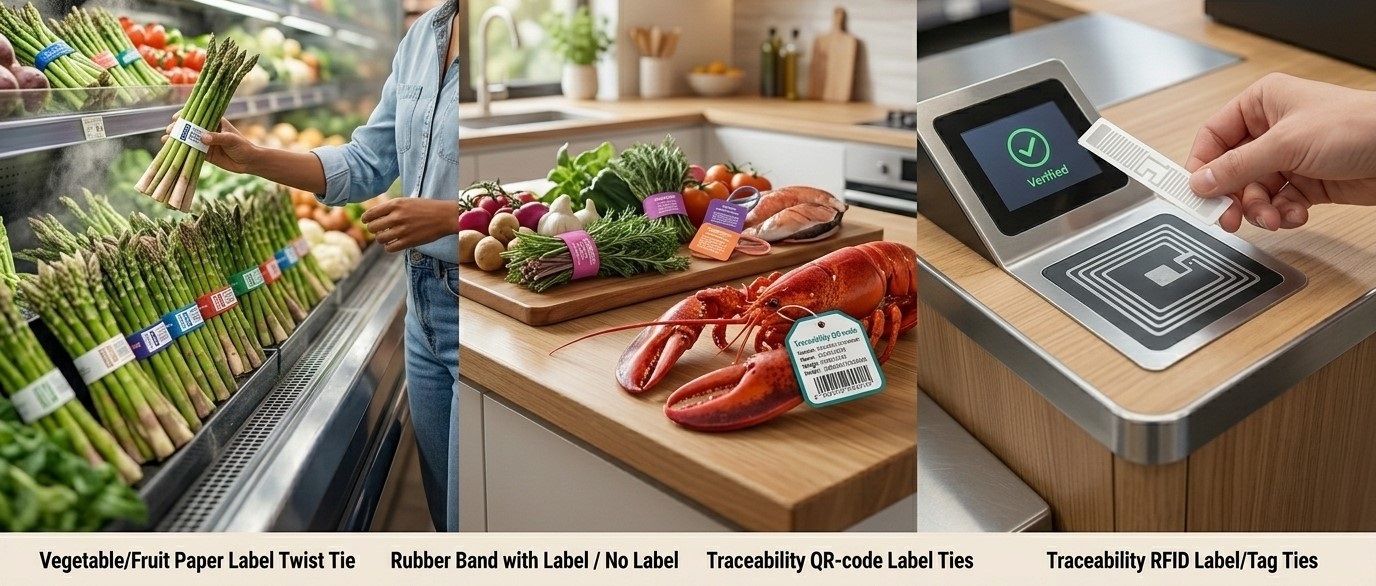
Choosing a label tie involves more than deciding what information to print. The label, fastening structure, and operating environment must work together.
First, determine what the label needs to communicate. This could include a part number, product description, identification code, or barcode.
Consider the available label area, text size, reading distance, and scanning requirements. If custom printing is needed, confirm that the specific product supports the required printing method and layout rather than assuming all label ties are printable.
The fastening component must suit the shape, dimensions, and arrangement of the item being secured.
Check how the tie attaches, whether tools are required, and whether the product can be removed or replaced when identification changes. For cables or grouped components, also consider whether the fastening method is appropriate for the item and does not create unwanted pressure or interference.
Consider where the label tie will be used and stored. Moisture, temperature changes, sunlight, chemicals, and mechanical handling may affect the suitability of the fastening material or label.
Confirm material compatibility and environmental performance against the specific product data. Do not assume that a label tie is waterproof, heat-resistant, UV-resistant, or suitable for outdoor use unless those properties are documented.
If identification information changes frequently, consider how easily the label can be updated and whether the fastening component can be removed and used again.
Reuse depends on the fastening structure, material, and condition after removal. Some designs may support reuse, while others may not. Check the product specification before relying on this feature.
A label tie is appropriate when an item needs to be fastened and carry associated identification information. Other products may be more suitable when the primary task is different.
Choose a label tie when fastening and identification need to be combined in one product.
Choose an ordinary tie when the main requirement is securing an item or bundle and a separate label is unnecessary.
Choose a bag closure when the primary task is closing a bag opening rather than identifying a component or bundle.
Choose a separate label and tie when the label and fastening components need to be specified independently.
These options are not interchangeable in every application. The decision should be based on the item's shape, the required fastening method, the information to be displayed, and the need for removal or relabeling.
Choose a label tie when you want fastening and identification provided together in a combined product. A separate label and tie may be preferable when you need greater flexibility in label size, material, or the choice of fastening component.
No. A regular twist tie is primarily used to secure an item or close a bag, depending on its design and application. A label tie also provides an integrated label area or attached tag for identification. The two products may serve different purposes even if their fastening structures are similar.
Reuse depends on the product's fastening structure and label design. Some products may allow removal and reuse, while others are intended for one-time application. Confirm this feature in the product specification.
That depends on the label format and the product's available marking options. Some designs may support printing, while others may be intended for handwriting or pre-marked identification. Confirm the available options before ordering.
A label tie combines fastening with identification, helping keep information associated with an item or bundle during handling and storage. When selecting one, consider the label format, information requirements, attachment method, material compatibility, and whether the label or fastening component needs to be changed later.
The most suitable product is the one whose fastening structure and identification format match the actual application. Always confirm the specific product details before making a selection.