Mar 01-2026
Improving Agricultural Productivity: How to Choose the Most Durable Garden Twist Ties
READ MORE >

Deep in kitchen drawers, there are often seemingly insignificant pieces of metal wire, often clad in colorful plastic or paper, quietly waiting for their moment of use. These are twist ties—a simple yet incredibly powerful gadget. From closing bread bags to organizing wires, from gardening to crafting, these slender twist ties, with their incredible adaptability, have become an indispensable, invisible aid in our daily lives.
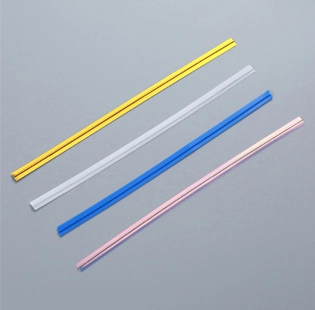
The core advantage of twist ties lies in their unique structural design. The inner metal filaments provide flexibility and shape retention, while the outer covering adds a tactile feel and insulation. This design allows them to be easily wrapped around and secured, yet easily undone and reused when needed. Compared to disposable plastic clips or rubber bands, twist ties offer a more precise hold, neither over-tightening and damaging items nor over-loosening and losing their hold.
In the kitchen, twist ties are particularly valuable. Not only does it perfectly seal all kinds of food packaging, preserving the crispness of snacks and the aroma of coffee grounds, it also offers unexpected uses during cooking: securing roasted chicken wings to prevent burning, sealing openings in stuffing, and even serving as a makeshift thermometer holder. Its malleability allows it to adapt to various container and packaging shapes, creating a customized seal.
Beyond the kitchen, twirls have become a versatile tool for home organization. Twirls can easily organize the tangled wires behind electronics; they discreetly secure ribbons and ornaments for holiday decorations; and gardeners find them ideal for tying seedlings and arranging flower branches, providing a secure fit without damaging plant stems. Even in schools and offices, twirls can be used to temporarily fix glasses, organize file bundles, or become a valuable resource for creative projects.
From an environmental perspective, twirls are also commendable. Most twirls are made of metal and plastic (or paper). While compact, they are highly reusable. A single tie can often last for months or even years, and its eventual recycling is relatively simple. In contrast, disposable plastic closures generate more plastic waste, while rubber bands age and break easily, resulting in a limited lifespan. Choosing to reuse a tie is, in essence, a microscopic act of support for a sustainable lifestyle.
The simple design of a tie reminds us that solving everyday problems doesn't necessarily require complex and expensive solutions. Sometimes, the most effective tools are those time-tested, basic designs—cheap, readily available, and incredibly effective. In an age of high-tech solutions, the unassuming yet reliable performance of a tie proves the enduring appeal of simple design.
Every time we deftly twist a tie to seal a bag of food or cleverly use it to solve a minor problem, we are actually participating in a micro-art of everyday life. Though small, a tie embodies the philosophy of efficiency, economy, and sustainability. It doesn't require a flashy appearance or complex functionality; it simply provides just the right amount of holding force when needed. This is precisely its enduring appeal—a glimpse into the wisdom of human design in its most subtle details.